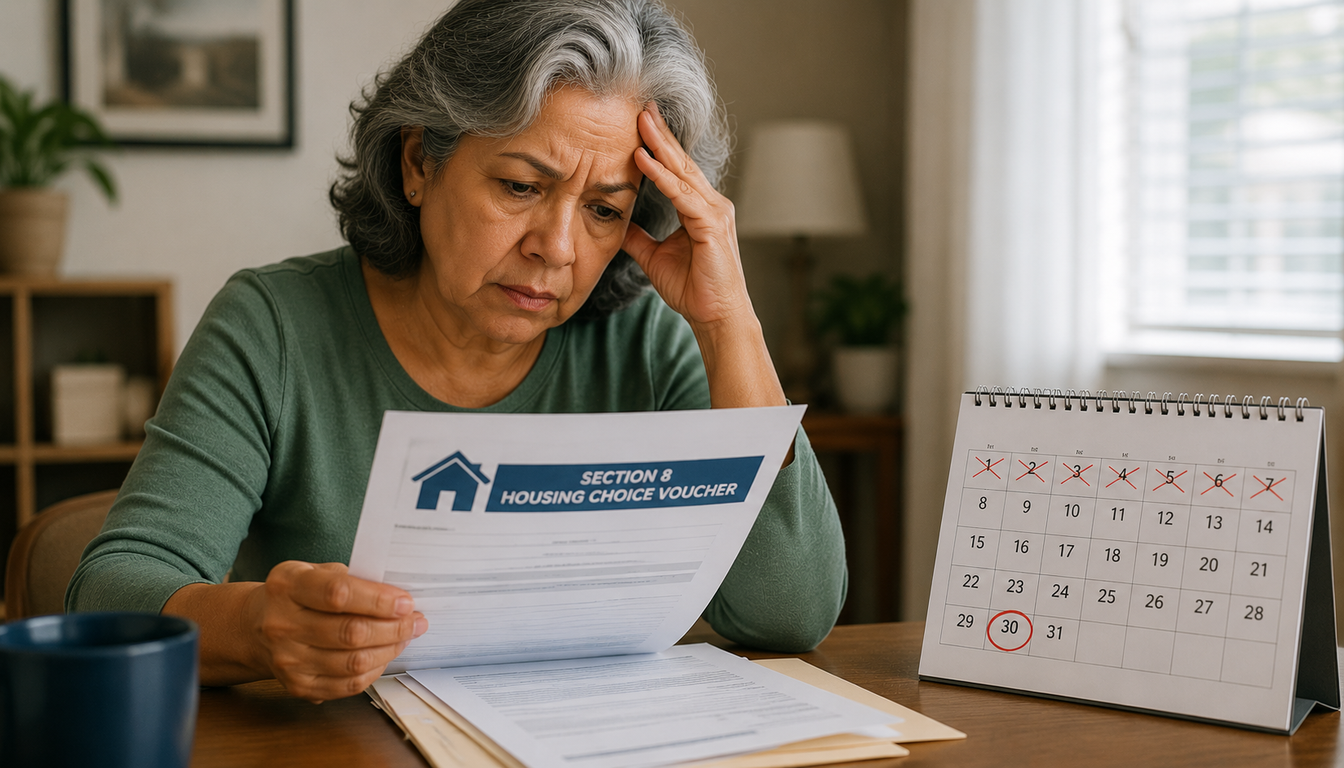

The short answer is: sometimes, but there are specific federal rules that apply only to college students — and they're different from the rules that apply to everyone else. If you're a student wondering whether you can get a Section 8 voucher on your own, or a parent trying to understand how your child's enrollment affects your household's assistance, this article breaks down exactly how the rules work.
Why Students Have Special Rules
In 2005, Congress passed restrictions specifically targeting college students seeking Section 8 assistance independently from their parents. According to the Federal Register notice implementing this rule, the change was designed to prevent students from using their own low income — separate from their parents' income — to qualify for housing assistance meant for low-income families, when their parents might actually have the financial means to support them.
Before this rule, some students would apply for Section 8 individually, reporting only their own income (often low, since many students don't work full-time), even if their parents earned well above the program's limits. The 2005 rule closed that gap.
This is important context because it explains why the student rules exist and who they're actually designed to address — not students with low-income families, but students attempting to qualify independently while their parents could otherwise support them.
Who the Student Restriction Applies To
According to HUD's eligibility guidance, the restriction specifically applies to students who meet all of the following criteria:
- Enrolled at an institution of higher education
- Under the age of 24
- Not a veteran
- Unmarried
- Does not have a dependent child
- Seeking Section 8 assistance individually — separate from their parents
If you meet all of these criteria, you fall under the student restriction, and additional rules apply before you can receive assistance on your own.
Importantly, this rule applies regardless of whether the student is full-time or part-time. Many people assume only full-time students are restricted, but HUD's guidance makes clear that both full-time and part-time students enrolled in higher education are subject to these additional eligibility criteria.
What the Restriction Actually Requires
If you fall under this category, you cannot automatically qualify for Section 8 based on your own income alone. Instead, you must meet at least one of the following conditions:
You are individually income eligible, AND your parents are also income eligible. Both you and your parents' household must independently fall within Section 8 income limits for the program to consider you eligible. If your parents earn too much — even if you personally earn very little — you would not qualify under this pathway.
You are classified as an independent student under standards established by HUD, generally aligned with the U.S. Department of Education's definition of an independent student. This typically requires establishing a household separate from your parents for at least one year prior to applying, along with meeting other independence criteria such as being financially self-sufficient.
You are a person with a disability who was already receiving HCV assistance as a member of your parents' household before turning 18.
You meet the definition of a "Vulnerable Youth." This includes unaccompanied homeless youth as defined under the McKinney-Vento Homeless Assistance Act, verified by a school's designated homeless liaison during the school year in which the application is submitted.
If none of these apply to you, you generally cannot receive Section 8 assistance independently while enrolled in higher education and under 24.
If You Qualify, How Is Your Income Counted?
The rules around how student income is calculated are also different from standard household income calculations.
Financial aid is generally excluded from income — unless you're receiving Section 8 assistance. If a student is not currently receiving Section 8 assistance, all forms of financial aid — grants, scholarships, work-study earnings, and other education funding — are excluded from the income calculation entirely.
If you ARE receiving Section 8 assistance, the rule changes. In that case, any financial aid you receive beyond what covers tuition and required fees is counted as income. Costs like room and board, books, supplies, transportation, and parking are not considered part of tuition, meaning financial aid covering those costs would generally be counted toward your income.
There are two exceptions to this rule: students living with parents who are applying for or receiving Section 8 assistance, and students who are 24 or older with dependent children. For these groups, the standard financial aid exclusion still applies.
If you're a dependent household member who works, only a small portion of your wages counts. If a student is employed but is not the head of household, co-head, or spouse — and is a dependent within the household — only $480 of that student's annual wages is counted as income for the entire 12-month period, regardless of how much they actually earn. This is a meaningful protection for students who work part-time while living with a parent who receives assistance.
What If You Live With Your Parents Who Receive Section 8?
If you are a student under 24 living with your parents, and your parents are the ones receiving Section 8 assistance, the individual student restriction generally does not apply to you in the same way. You're considered part of your parents' household, not an independent applicant. Your income, as discussed above, is mostly protected under the $480 annual cap if you're a dependent and not the head of household.
This is the most common situation for college students connected to Section 8 — being part of a household where a parent holds the voucher, rather than applying individually.
Veterans, Married Students, and Students With Children
The restriction specifically does not apply to veterans, married students, or students with a dependent child. If you fall into any of these categories, the standard Section 8 eligibility rules apply to you the same way they would to any other applicant — your own income and household circumstances are evaluated without the additional student-specific restrictions.
This matters for student veterans in particular, who can apply for Section 8 using the same process as any other eligible household, regardless of their enrollment status or age.
Get Clarity on Your Specific Situation at Section 8 AI
Because student eligibility involves several overlapping conditions — your age, enrollment status, marital status, veteran status, parental income, and more — it can be difficult to know exactly where you stand without working through the details specific to your situation.
Section 8 AI generates a personalized housing eligibility report based on your income, household size, and location. While the student-specific rules add a layer of complexity beyond a standard income comparison, your report gives you a clear starting point — showing what programs may be available to your household and what the local income limits look like in your area.
Go to Section 8 AI and get your personalized housing eligibility report. If your situation involves the student eligibility rules, use that information alongside a conversation with your local PHA to confirm exactly how the restrictions apply to you.
What to Do Next
Contact your local PHA directly. Because student eligibility involves specific verification requirements — proof of independent student status, parental income documentation, or vulnerable youth certification — your local Public Housing Authority is the best resource to walk through your specific circumstances and tell you exactly what documentation you'll need.
Gather documentation early. If you believe you qualify as an independent student, start gathering proof of your separate household status, financial independence, and any other documentation required under the Department of Education's independent student definition.
If you're a vulnerable or unaccompanied youth, connect with your school's designated homeless liaison, who can help verify your status under the McKinney-Vento Act and support your application.
Explore campus and local resources. Many colleges and universities have housing or financial aid offices that can help connect students experiencing housing insecurity with local resources, including emergency assistance and other forms of support beyond Section 8.
And for help finding affordable housing options once you understand your eligibility, visit our partner site Section 8 Search to browse listings and participating landlords in your area.
The Bottom Line
College students can qualify for Section 8, but the path depends on specific circumstances — age, enrollment, marital status, veteran status, and whether you're applying independently or as part of your parents' household. The rules exist to make sure assistance goes to students who genuinely need it, not those who could be supported by higher-earning parents.
If you think you may qualify under one of the exceptions — independent student status, vulnerable youth, disability, or veteran status — start by contacting your local PHA and gathering the documentation that applies to your situation.
Go to Section 8 AI, get your personalized housing eligibility report, and take the next step toward understanding your full range of housing options.