One of the most common questions people have before applying for public housing is simple: how much will I actually pay each month? The answer isn't a single flat number — it's calculated based on your specific household income and circumstances. But the formula is consistent, and once you understand it, you can estimate your own rent before you ever sign a lease.
This article breaks down exactly how public housing rent is calculated, what counts as income, which deductions reduce your payment, and what the final number is likely to look like for your household.
The Basic Formula: 30% of Adjusted Income
Public housing rent in the United States is governed by federal rules set by the U.S. Department of Housing and Urban Development (HUD). The standard rent formula requires tenants to pay the highest of the following amounts:
- 30% of monthly adjusted income
- 10% of monthly gross income
- The welfare rent, if applicable (a state-defined amount for households receiving welfare assistance)
- A minimum rent set by the housing authority — typically between $0 and $50 per month
For most households, the 30% of adjusted income figure is the one that applies. The other calculations exist as floors to ensure some minimum contribution, but they rarely exceed the 30% calculation for households with regular income.
This formula is the same core principle as Section 8 — you pay based on what you earn, not based on market rates. The difference is that in public housing, the unit itself is government-owned and managed by your local Public Housing Authority (PHA), rather than a private landlord.
Gross Income vs. Adjusted Income: Why the Difference Matters
The formula uses your adjusted income — not your raw gross income. This distinction can meaningfully reduce your monthly rent.
Gross income is the total income your household receives from all sources before any deductions are applied. This includes wages, Social Security, disability payments, child support, unemployment, pension income, and any other regular income.
Adjusted income is what's left after you subtract the deductions your PHA applies based on your household's situation. These deductions are defined in HUD's income calculation guidelines and include:
Dependent deduction: $480 per year for each dependent in your household — children under 18, full-time students of any age, and people with disabilities who are not the head of household or spouse.
Elderly or disabled household deduction: If the head of household or their spouse is 62 or older, or has a disability, the household qualifies for a $400 annual deduction.
Medical expense deduction: Elderly or disabled households can deduct unreimbursed medical expenses that exceed 3% of gross annual income. For households with significant medical costs, this can be a meaningful reduction.
Childcare deduction: Reasonable childcare expenses that allow a household member to work, attend school, or pursue job training are deductible.
Once these deductions are subtracted from gross income, the result is your adjusted income. Your monthly rent is 30% of that adjusted monthly figure.
A Simple Example
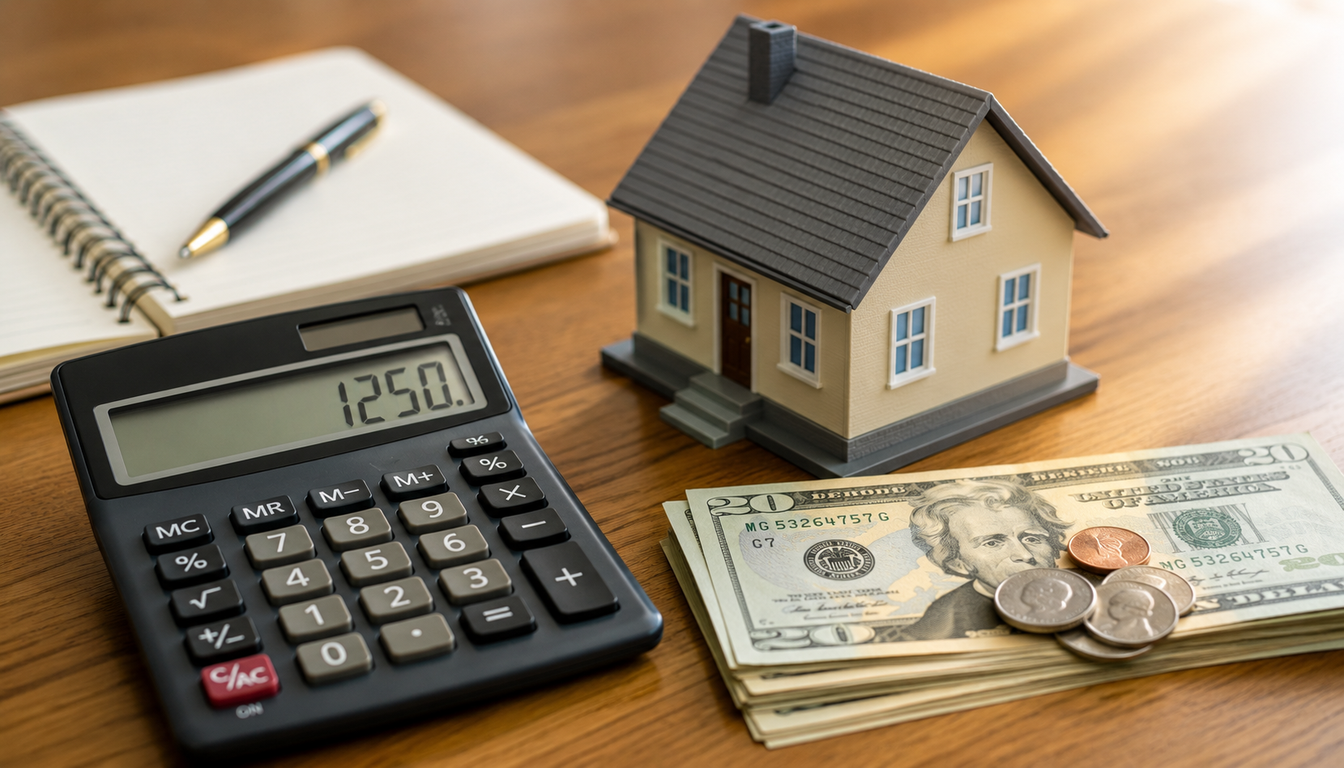
Here's how the calculation works in practice:
- Household gross annual income: $18,000
- One dependent child (deduction: $480)
- Adjusted annual income: $17,520
- Adjusted monthly income: $1,460
- Monthly rent: 30% of $1,460 = $438
Now compare that to the same household without applying the dependent deduction:
- 30% of $1,500 (gross monthly) = $450
The dependent deduction saved this household $12 per month — or $144 per year. With multiple dependents or other applicable deductions, the savings add up further.
What About Utilities?
In some public housing units, utilities are included in the rent. In others, tenants pay utilities separately. How this is handled depends on your specific property and PHA.
If utilities are included in the rent, your 30% calculation covers everything — your total housing cost is that one monthly payment.
If utilities are not included, your PHA may apply a utility allowance — a credit toward your rent payment that reflects the estimated cost of utilities for your unit size. This means your rent payment to the housing authority is reduced by the utility allowance, since you're covering those costs yourself.
If your utility allowance exceeds your calculated rent amount, you may actually receive a utility reimbursement check from your PHA. This is not common, but it does happen in lower-income households with larger utility allowances.
Ask your PHA specifically whether utilities are included in your unit and what the utility allowance is for your unit size. These numbers directly affect your total monthly housing cost.
Flat Rents: An Alternative Calculation
In addition to the income-based rent formula, many PHAs offer what's called a flat rent — a set monthly amount that's based on the market value of the unit rather than your income.
Flat rents are set at or below 80% of the market rent for similar units in your area. Tenants can choose a flat rent instead of the income-based calculation, which sometimes makes sense for households whose incomes have grown and whose income-based rent would otherwise be higher than the flat rate.
Flat rents are recalculated periodically by the PHA, and tenants are given the option to switch between income-based and flat rent as their circumstances change. Ask your PHA what the current flat rent is for your unit type — in some cases it may actually result in a lower monthly payment than the income-based formula.
Annual Recertification: When Your Rent Is Reviewed
Public housing rent is not permanently fixed. It's reviewed at least once a year during what's called the annual recertification — a process where your PHA verifies your current income, household size, and other factors that affect your rent calculation.
If your income goes up between recertifications, your rent will increase at the next recertification. If your income goes down, your rent decreases. If a household member moves in or out, that changes both your household size and your applicable deductions.
You are also required to report significant income or household changes to your PHA between annual recertifications — not just at the yearly review. Missing this obligation can result in having to repay the difference between what you paid and what you should have paid, which can become a large and unexpected cost.
The HUD guidelines on tenant obligations in public housing are clear: keeping your income and household information current is your responsibility as a tenant.
How Your Income Limit Is Set
To be eligible for public housing in the first place, your household income must fall below a certain threshold. Public housing programs typically use an income limit of up to 80% of the local Area Median Income (AMI), making them accessible to a slightly wider income range than the Section 8 voucher program, which typically uses 50% of AMI as its limit.
You can look up the income limits for your area and household size using HUD's income limits database, which HUD updates every year for every county and metro area in the country.
Know Your Full Eligibility Picture at Section 8 AI
Understanding public housing rent calculations is useful — but it's even more useful when you know whether you actually qualify for public housing in your specific area, and what other programs might also be available to your household.
Section 8 AI generates a personalized housing eligibility report based on your income, household size, and location. It shows you which programs your household qualifies for right now — including both public housing and the Section 8 voucher program — and whether local waitlists are currently open or closed.
Go to Section 8 AI and get your personalized housing eligibility report. Walk into the public housing application process knowing your numbers, your eligible programs, and your next steps.
Public Housing vs. Section 8: Which Calculation Benefits You More?
Both public housing and Section 8 use the same 30% of adjusted income formula as their core calculation. The key practical differences are:
- In public housing, you live in a government-owned unit and pay the PHA directly
- In Section 8, you find your own unit in the private market and the PHA pays part of your rent to the landlord
For most households, the monthly rent contribution under both programs works out to a similar amount — since it's based on income, not market rates. The bigger differences are in availability, unit selection, and whether the assistance is portable.
Because the rent formula is essentially the same, applying to both programs simultaneously makes sense. You don't have to choose one upfront. Apply to every program you qualify for and accept whichever opportunity comes first.
For help finding available public housing developments and other affordable listings near you, visit our partner site Section 8 Search.
Additional Resources
- HUD's public housing program overview
- Income limits by area and household size
- Find your local PHA
- HUD's income and rent calculation guidelines
- HUD-approved housing counselors
The Bottom Line
Public housing rent follows a clear formula: 30% of your adjusted monthly income, after applicable deductions. The more deductions your household qualifies for — dependents, disability, medical expenses, childcare — the lower your adjusted income and the lower your rent.
Know your gross income. Know your deductions. Do the math. And make sure you're applying to every program available in your area.
Go to Section 8 AI, get your personalized housing eligibility report, and take the next step toward housing you can genuinely afford.